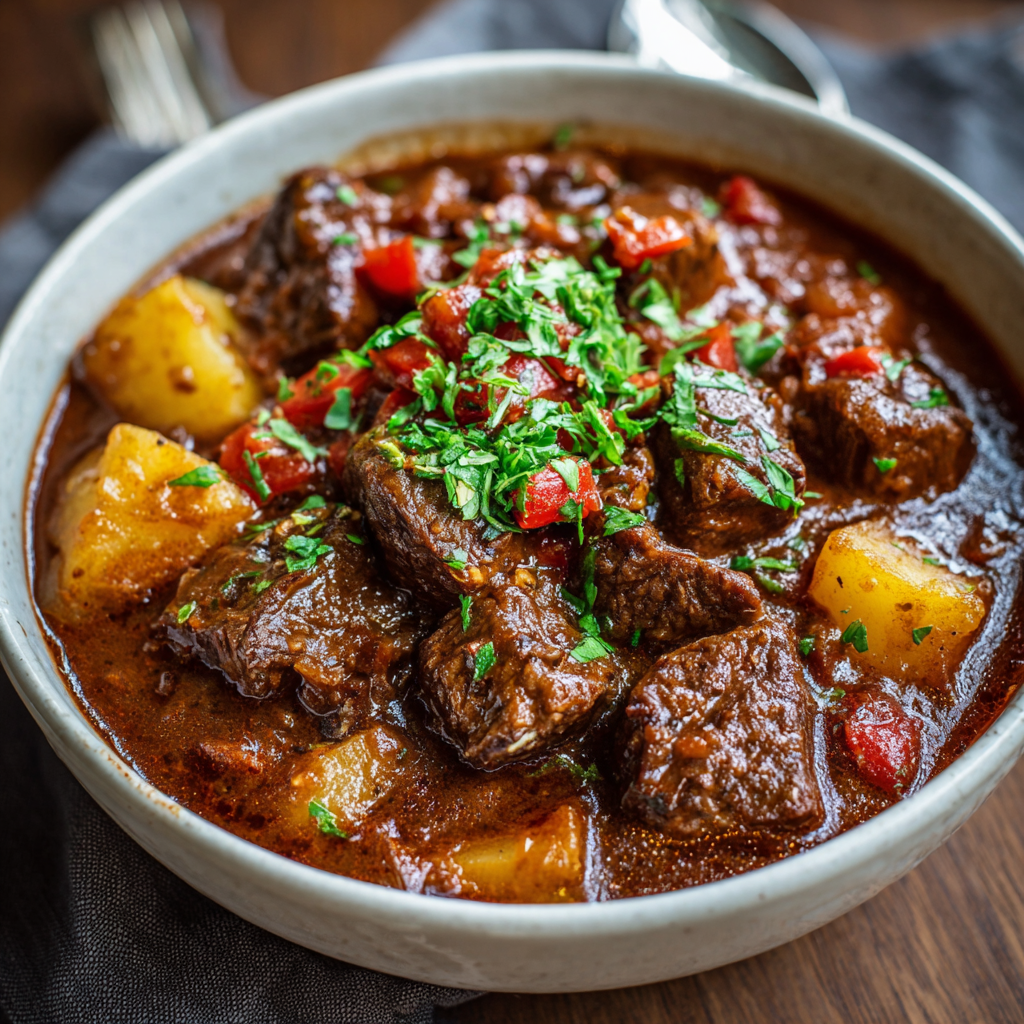
Classic German Goulash
Classic German Goulash is the kind of dish that defines comfort cooking. Deeply savory, rich with paprika, and built on a generous foundation of slow-cooked onions and tender beef, this traditional stew is a staple in many German households—especially during colder months. Unlike Hungarian goulash, which is often more soup-like, Classic German Goulash is thicker, heartier, and designed to be served over spaetzle, egg noodles, potatoes, or crusty bread.
This dish is proof that simple ingredients, treated with patience and respect, can create extraordinary results. With just 30 minutes of hands-on prep and a long, gentle braise, you’ll achieve a stew that’s deeply flavorful, warming, and even better the next day. Whether you’re cooking for family, guests, or meal-prepping for the week, Classic German Goulash delivers timeless satisfaction.
More breakfast ideas you’ll love
What Makes Classic German Goulash Different?
While the word “goulash” often brings Hungary to mind, Germany has its own beloved interpretation. Classic German Goulash emphasizes onions as the primary thickener, rather than flour or roux. The onions melt into the sauce during cooking, creating a naturally rich and velvety texture without any added starches.
Paprika is still the star spice, but the profile is gentler and rounder. Sweet Hungarian paprika provides warmth and color, while marjoram and caraway add subtle herbal and earthy notes. The result is a stew that feels robust yet balanced—never heavy, never overpowering.
Another defining feature of Classic German Goulash is its versatility. It’s equally at home at a Sunday family table, a festive gathering, or a cozy weeknight dinner. Served simply, it feels rustic and comforting; paired thoughtfully, it can feel elegant and special.
Why You’ll Love This Classic German Goulash
There are many reasons why Classic German Goulash has stood the test of time:
-
Deep, slow-developed flavor from hours of gentle braising
-
Naturally thick and rich without flour or cornstarch
-
Make-ahead friendly—it tastes even better the next day
-
Flexible cooking methods (oven, stovetop, slow cooker, Instant Pot)
-
Diet-friendly: gluten-free, dairy-free, low-carb, paleo, and keto
-
Perfect for cozy meals during fall and winter
If you appreciate dishes that reward patience and improve with time, Classic German Goulash belongs in your regular rotation.
A Brief History of German Goulash
Goulash entered German cuisine in the 19th century, influenced by Austro-Hungarian cooking traditions. Over time, German cooks adapted the dish to local tastes and ingredients, resulting in the thicker, onion-forward version we know today as Classic German Goulash.
In Germany, you’ll find variations across regions. Some versions include bell peppers or tomatoes, others rely solely on onions and paprika. Some households add a splash of wine or vinegar for acidity, while others keep it strictly savory. What unites them all is the slow cooking process and the emphasis on beef and onions as the foundation.
Ingredients for Classic German Goulash
This recipe sticks closely to traditional proportions, ensuring authentic flavor and texture.
Ingredients
-
1½ pounds onions, chopped
-
2 tablespoons olive oil
-
2 pounds beef chuck roast or stew beef, cubed (1–1½-inch pieces)
-
½ green pepper, chopped
-
3 cloves garlic, minced
-
½ tomato, seeded and diced (about ⅓ cup)
-
1 teaspoon kosher salt, divided
-
½ teaspoon black pepper
-
2 tablespoons sweet Hungarian paprika
-
2 teaspoons dried marjoram
-
1 teaspoon caraway seed
-
2 tablespoons tomato paste
-
2 cups beef broth or bouillon
-
½ cup dry red wine
-
1 bay leaf
-
¼ cup fresh parsley, chopped (for garnish)
Ingredient Tips for the Best Results
Onions: The Backbone of the Sauce
The large quantity of onions might seem excessive, but they are essential. As they cook down, they dissolve into the sauce, creating body and sweetness. Don’t rush this step—properly softened onions are key to authentic Classic German Goulash.
Paprika: Choose Quality
Use sweet Hungarian paprika, not smoked or hot varieties. Paprika is the soul of Classic German Goulash, providing color and warmth without bitterness. Old paprika loses flavor, so use fresh if possible.
Beef: Chuck Is King
Chuck roast is ideal because it has enough fat and connective tissue to become tender during long cooking. Lean cuts will dry out and won’t give you the same luxurious texture.
Wine and Tomato
The small amount of tomato and red wine adds acidity and depth without turning the dish into a tomato-based stew. The goal is balance, not dominance.
Classic German Goulash: Step-by-Step Instructions (Oven Method)
Step 1: Preheat the Oven
Preheat your oven to 325°F (165°C) and position the rack in the center.
Step 2: Cook the Onions
Heat olive oil in a Dutch oven over medium heat. Add the chopped onions and ½ teaspoon salt. Cook for 15–20 minutes, stirring occasionally, until the onions are very soft and lightly golden. This step builds the foundation of your Classic German Goulash.
Transfer the onions to a bowl and set aside.
Step 3: Brown the Beef
Season the beef cubes with the remaining salt and black pepper. Increase the heat to medium-high and brown the beef for 5–10 minutes, working in batches if needed. Proper browning adds depth and richness.
Step 4: Build the Goulash
Return the onions to the pot. Add green pepper, tomato, garlic, paprika, marjoram, caraway seed, tomato paste, beef broth, red wine, and bay leaf. Stir thoroughly to combine and bring to a boil.
Step 5: Braise
Cover the Dutch oven with the lid slightly askew and transfer to the oven. Braise for 1½ hours, or until the beef is fork-tender and the sauce is thick and glossy.
Step 6: Finish and Serve
Remove the bay leaf, garnish with fresh parsley, and serve hot. Your Classic German Goulash is ready to enjoy.
Cooking Variations
Slow Cooker Method
-
Brown onions and beef as directed.
-
Transfer everything to a slow cooker.
-
Cook 6–8 hours on low or 3–4 hours on high.
-
To thicken, uncover and simmer for 45–60 minutes near the end.
Stovetop Method
-
After bringing to a boil, reduce heat to medium-low.
-
Simmer with lid slightly ajar for 1½–2 hours, stirring occasionally.
Instant Pot Method
-
Use sauté mode to brown onions and beef.
-
Add remaining ingredients and cook on High Pressure for 35 minutes.
-
Allow natural pressure release.
-
Use sauté mode for 10–15 minutes to thicken if needed.
Serving Suggestions for Classic German Goulash
Classic German Goulash is traditionally served with:
-
Spaetzle (German egg noodles)
-
Buttered egg noodles
-
Mashed potatoes
-
Steamed potatoes
-
Crusty rye or farmhouse bread
For balance, pair it with something fresh and crisp like cucumber salad, red cabbage slaw, or simple green beans.
Storage and Reheating
One of the greatest strengths of Classic German Goulash is how well it keeps.
-
Refrigerator: Store in an airtight container for up to 4 days.
-
Freezer: Freeze for up to 3 months. Thaw overnight in the fridge.
-
Reheating: Warm gently on the stovetop over low heat, adding a splash of broth if needed.
The flavors deepen over time, making leftovers even more delicious.
Tips for the Best Classic German Goulash
-
Don’t rush the onions—they create the sauce.
-
Avoid high heat after adding paprika, as it can turn bitter.
-
Let it rest overnight if possible for maximum flavor.
-
Skip thickening agents—traditional goulash relies on onions alone.
-
Taste at the end, adjusting salt and acidity as needed.
Classic German Goulash
Classic German Goulash is a rich, comforting beef stew made with tender chunks of beef, lots of slow-cooked onions, sweet Hungarian paprika, and warm spices like caraway and marjoram. Unlike Hungarian goulash soup, this German version is thicker and heartier, perfect for cozy family dinners. With just 30 minutes of hands-on prep and a few hours of gentle braising, you’ll end up with a deeply flavorful, melt-in-your-mouth stew that tastes even better the next day.
Ingredients
-
1½ pounds onions, chopped
-
2 tablespoons olive oil
-
2 pounds beef chuck roast or stew beef, cubed (1–1½-inch pieces)
-
½ green pepper, chopped
-
3 cloves garlic, minced
-
½ tomato, seeded and diced (about ⅓ cup)
-
1 teaspoon kosher salt, divided
-
½ teaspoon black pepper
-
2 tablespoons sweet Hungarian paprika
-
2 teaspoons dried marjoram
-
1 teaspoon caraway seed
-
2 tablespoons tomato paste
-
2 cups beef broth or bouillon
-
½ cup dry red wine
-
1 bay leaf
-
¼ cup fresh parsley, chopped (for garnish)
Instructions
-
Preheat the oven to 325°F (165°C) and place the rack in the center.
-
Heat olive oil in a Dutch oven over medium heat. Add onions and ½ teaspoon salt. Cook for 15–20 minutes, stirring occasionally, until very soft and golden.
-
Transfer onions to a bowl and set aside.
-
Season beef with remaining salt and black pepper. Increase heat to medium-high and brown beef for 5–10 minutes.
-
Return onions to the pot. Add green pepper, tomato, garlic, paprika, marjoram, caraway seed, tomato paste, beef broth, red wine, and bay leaf. Stir well and bring to a boil.
-
Cover with the lid slightly askew and transfer to the oven.
-
Braise for 1½ hours, or until beef is fork-tender.
-
Remove bay leaf, garnish with parsley, and serve hot.
Notes
-
Don’t rush the onions: They form the base of the sauce and add natural thickness.
-
Use sweet Hungarian paprika: Avoid smoked or hot paprika unless you want a different flavor profile.
-
Chuck roast is ideal: It becomes tender and juicy with long cooking.
-
Let it rest: Goulash tastes even better the next day as flavors deepen.
-
Naturally thick: No flour needed—the onions do all the work.
Nutrition (Approximate Per Serving)
-
Calories: 460 kcal
-
Protein: 38 g
-
Fat: 30 g
-
Saturated Fat: 7 g
-
Carbohydrates: 12 g
-
Fiber: 3 g
-
Sugar: 6 g
Final Thoughts
Classic German Goulash is more than just a beef stew—it’s a lesson in patience, tradition, and the beauty of simple ingredients. With its rich paprika aroma, tender chunks of beef, and luxuriously thick sauce created entirely from slow-cooked onions, this dish embodies everything comforting and timeless about German home cooking.
What makes Classic German Goulash truly special is its ability to bring people together. It’s the kind of meal that fills the kitchen with warmth, invites conversation, and encourages second helpings. It doesn’t rely on flashy techniques or trendy ingredients—just honest cooking done well.