Cider Brined Roast Chicken
An Elegant, Deeply Flavorful Centerpiece for Holidays and Sunday Dinners
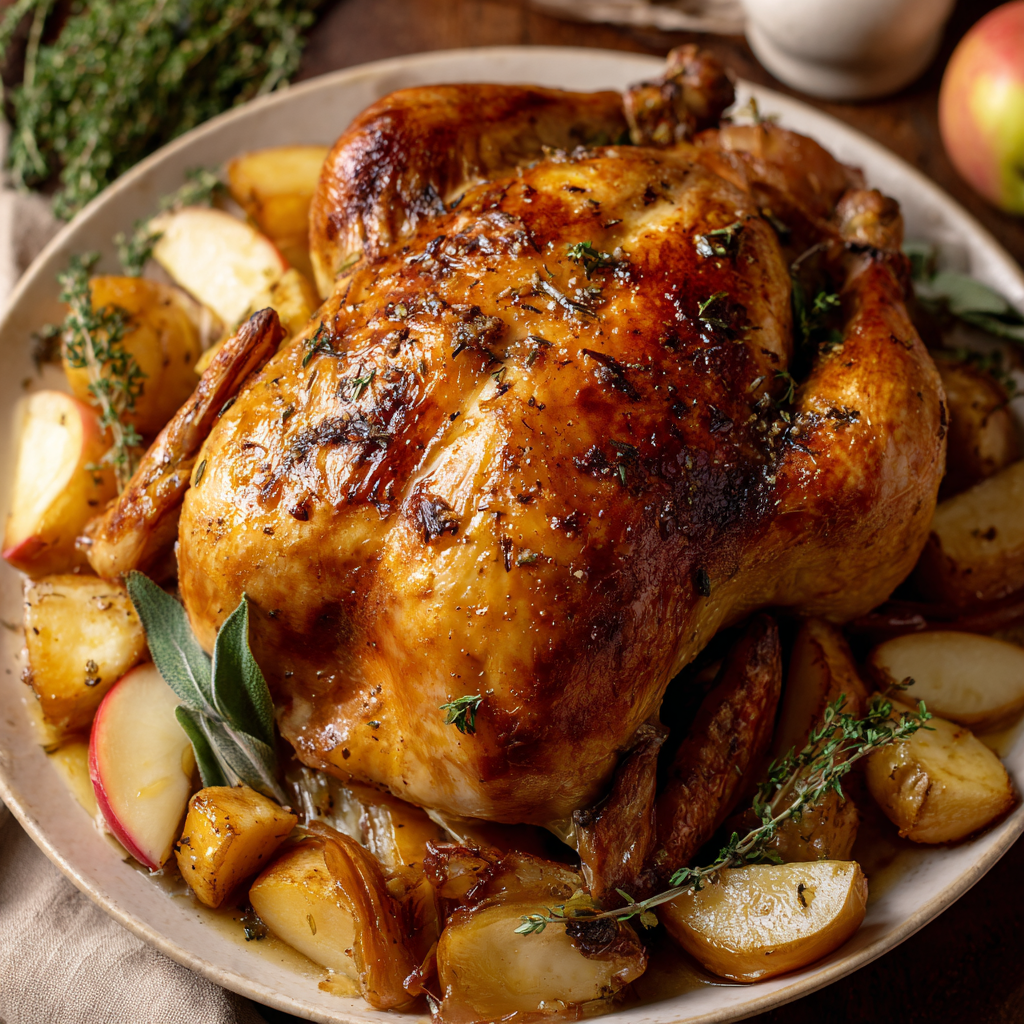
Cider Brined Roast Chicken is one of those rare dishes that feels both comforting and impressive at the same time. It’s rustic enough for a cozy Sunday dinner, yet refined enough to anchor a holiday table. The secret lies in the brine: a fragrant bath of apple cider, herbs, salt, and sugar that gently seasons the chicken all the way to the bone. After a long soak, the bird is roasted with apples, citrus, and aromatics, then finished with a glossy cider–maple glaze and a rich pan gravy that captures every bit of flavor left in the roasting pan.
More breakfast ideas you’ll love
If you’ve ever struggled with dry roast chicken, uneven seasoning, or bland meat beneath beautiful skin, this Cider Brined Roast Chicken recipe is the answer. Brining ensures juicy meat throughout, while air-drying before roasting delivers crisp, golden skin. The apples and cider add gentle sweetness, balanced by herbs and pepper, making this dish feel warm, autumnal, and deeply satisfying.
This post will walk you through everything you need to know—from why cider brining works, to step-by-step roasting tips, variations, make-ahead strategies, serving ideas, and a detailed final thoughts section. Whether you’re cooking for a holiday gathering or simply elevating your weekend dinner, this Cider Brined Roast Chicken is a recipe you’ll come back to again and again.
Why You’ll Love This Cider Brined Roast Chicken
There are countless roast chicken recipes out there, but this one stands out for several reasons:
1. Incredibly Juicy Meat
The cider brine penetrates deep into the chicken, seasoning it evenly and helping it retain moisture during roasting. Even the breast meat stays succulent and tender.
2. Layers of Flavor
Apple cider, herbs, citrus, garlic, and sage work together to create a complex yet comforting flavor profile. Nothing is overpowering—each element enhances the others.
3. Crisp, Golden Skin
Air-drying the brined chicken before roasting allows excess moisture to evaporate, resulting in beautifully crisp skin without deep frying or complicated techniques.
4. Perfect for Special Occasions
This Cider Brined Roast Chicken looks stunning on the table, surrounded by roasted apples and finished with a glossy glaze. It’s elegant enough for holidays, yet approachable enough for a relaxed family dinner.
5. Built-In Gravy
The pan drippings, infused with cider, herbs, and roasted aromatics, transform into a deeply flavorful gravy—no extra pots or complicated steps required.
What Is Cider Brining (and Why It Works)
Brining is the process of soaking meat in a seasoned liquid before cooking. In this recipe, apple cider replaces part of the water, adding subtle sweetness and fruitiness.
Here’s why cider brining is so effective:
-
Salt changes the structure of the meat proteins, allowing them to hold onto more moisture.
-
Sugar balances the salt and enhances browning during roasting.
-
Apple cider adds flavor without overpowering, giving the chicken a gentle, aromatic sweetness.
-
Herbs and spices infuse slowly, seasoning the meat evenly instead of just the surface.
The result is a roast chicken that’s juicy, flavorful, and forgiving—even if you cook it slightly longer than planned.
Ingredients + Tips
For the Brine
-
2 L water
Acts as the base for the brine. -
6½ cups apple cider, divided
Use fresh, unfiltered apple cider if possible. Avoid apple juice—it’s too sweet and lacks depth. -
1 cup kosher salt, plus extra
Kosher salt dissolves easily and seasons evenly. -
½ cup brown sugar
Adds subtle molasses notes and helps with browning. -
12–14 sprigs fresh thyme, divided
Thyme pairs beautifully with apple and poultry. -
1 tablespoon peppercorns
Adds gentle heat and complexity. -
1 L ice water
Quickly cools the brine so it’s safe for the chicken.
Tip: Make sure the brine is completely cool before adding the chicken to avoid partially cooking it.
Chicken & Roasting
-
6–7 lb whole roasting chicken
Choose a high-quality bird for best results. -
½ cup butter, softened
Forms the base of the compound butter that flavors the skin and meat. -
3 sprigs fresh sage, divided
Sage adds earthy warmth that complements the cider. -
1 orange
Provides brightness and aroma. -
½ teaspoon pepper, divided
Enhances savory notes. -
1 tablespoon olive oil
Prevents sticking and encourages browning. -
1 onion, sliced
Builds flavor in the pan juices. -
3 garlic cloves, peeled
Sweeten as they roast. -
3 Gala apples, halved
Roast alongside the chicken for sweetness and texture.
Tip: Gala apples hold their shape well, but Honeycrisp or Fuji are excellent substitutes.
Glaze & Gravy
-
2 tablespoons maple syrup
Adds depth and a glossy finish to the glaze. -
⅓ cup flour
Thickens the gravy. -
Extra chicken broth or apple cider, as needed
Helps adjust gravy consistency.
Step-by-Step Instructions
1. Brine the Chicken
In a large pot, combine the water, 4 cups of apple cider, kosher salt, brown sugar, bundled thyme, and peppercorns. Heat gently, stirring until the salt and sugar dissolve completely. There’s no need to boil—just warm enough to dissolve.
In a large food-safe container, add the ice water. Pour the warm brine over the ice water to cool it rapidly. Once the brine is completely cool, submerge the chicken breast-side down. Cover and refrigerate for 12–24 hours.
Why this matters: Longer brining equals deeper seasoning and juicier meat. Overnight is ideal.
2. Prepare for Roasting
Remove the chicken from the brine 1 hour before roasting. Discard the brine. Pat the chicken very dry with paper towels and place it on a rack set over a baking sheet. Let it air-dry at room temperature.
In a small bowl, mix the softened butter with chopped thyme, sage, orange zest, salt, and pepper to create a compound butter. Reserve 2 tablespoons for glazing later.
Tip: Dry skin is the key to crispness—don’t rush this step.
3. Roast the Chicken
Preheat your oven to 350°F (175°C).
In a large roasting pan, arrange sliced onion, orange slices, garlic cloves, thyme, and sage. Drizzle with olive oil. Place a roasting rack over the aromatics.
Stuff the chicken cavity with the remaining orange half and herbs. Rub the compound butter generously all over the skin and under the breast skin if possible. Tie the legs with kitchen twine and tuck the wings under.
Pour 1 cup apple cider into the roasting pan. Roast uncovered for 1 hour, tenting loosely with foil if the skin browns too quickly.
4. Add Apples & Glaze
After the first hour, arrange the halved apples around the chicken. Brush them with melted compound butter.
Meanwhile, reduce the remaining apple cider in a small saucepan by half. Whisk in maple syrup and the reserved butter to form a glaze.
When the chicken reaches about 140°F internal temperature, begin glazing. Brush the chicken generously, return it to the oven, and repeat once more as it finishes roasting. Continue roasting until the thickest part of the thigh reaches 165°F.
5. Make the Gravy
Transfer the chicken and apples to a platter and tent with foil to rest.
Strain the pan juices into a measuring cup, reserving about ¼ cup fat. Whisk the flour into the fat to form a roux. Slowly whisk in about 3 cups pan juices, adding broth or cider if needed. Simmer until thickened, season to taste, strain, and serve.
Tips for Success
-
Don’t skip the brine: It’s essential for juicy, well-seasoned meat.
-
Air-dry thoroughly: Crisp skin depends on it.
-
Use a thermometer: Guesswork leads to overcooking.
-
Choose the right apples: Firm, sweet varieties work best.
-
Plan ahead: Brine the chicken a day early to simplify cooking day.
Variations & Flavor Twists
-
Spiced Cider Brined Roast Chicken: Add cinnamon sticks, star anise, and cloves to the brine.
-
Herb-Forward Version: Increase sage and thyme, or add rosemary.
-
Citrus Swap: Replace orange with lemon or grapefruit for a brighter profile.
-
Honey Glaze: Substitute honey for maple syrup for a softer sweetness.
Storage & Reheating
-
Refrigerate: Store leftovers in an airtight container for up to 4 days.
-
Reheat gently: Warm in a low oven (300°F) with a splash of broth.
-
Freeze: Shred leftover meat and freeze for soups or casseroles.
Serving Suggestions
Serve Cider Brined Roast Chicken with:
-
Creamy mashed potatoes or roasted root vegetables
-
Buttery green beans or sautéed Brussels sprouts
-
Crusty bread to soak up the gravy
-
A crisp apple or pear salad for contrast
Cider Brined Roast Chicken
Cider Brined Roast Chicken is a beautifully moist, flavorful centerpiece that feels both rustic and elegant. Brining the chicken in apple cider, herbs, and spices ensures juicy meat all the way through, while roasting it with apples, citrus, and aromatics creates layers of warm, comforting flavor. Finished with a glossy cider–maple glaze and rich pan gravy, this roast chicken is perfect for holidays, Sunday dinners, or any occasion that calls for a truly special meal.
Ingredients
For the Brine
-
2 L water
-
6½ cups apple cider, divided
-
1 cup kosher salt, plus extra
-
½ cup brown sugar
-
12–14 sprigs fresh thyme, divided
-
1 tablespoon peppercorns
-
1 L ice water
Chicken & Roasting
-
6–7 lb whole roasting chicken
-
½ cup butter, softened
-
3 sprigs fresh sage, divided
-
1 orange
-
½ teaspoon pepper, divided
-
1 tablespoon olive oil
-
1 onion, sliced
-
3 garlic cloves, peeled
-
3 Gala apples, halved
Glaze & Gravy
-
2 tablespoons maple syrup
-
⅓ cup flour
-
Extra chicken broth or apple cider, as needed
Instructions
Brine the Chicken
-
Combine water, 4 cups apple cider, kosher salt, brown sugar, bundled thyme, and peppercorns in a large pot. Heat just until salt and sugar dissolve.
-
Add ice water to a large container, then pour in the brine to cool. Submerge the chicken breast-side down. Cover and refrigerate for 12–24 hours.
Prepare for Roasting
-
Remove chicken from brine 1 hour before roasting. Discard brine, pat chicken dry, and let air-dry on a rack at room temperature.
-
Mix softened butter with chopped thyme, sage, orange zest, salt, and pepper to make compound butter. Set aside 2 tablespoons.
Roast the Chicken
-
Preheat oven to 350°F (175°C). Arrange onion, orange slices, garlic, thyme, and sage in a roasting pan with olive oil. Place a rack on top.
-
Stuff chicken cavity with remaining orange half and herbs. Rub with compound butter, tie legs, and tuck wings.
-
Add 1 cup apple cider to the pan. Roast uncovered for 1 hour, tenting with foil if browning too quickly.
Add Apples & Glaze
-
Add halved apples around the chicken, brush with melted compound butter, and continue roasting 30–45 minutes.
-
Reduce remaining apple cider in a saucepan by half. Whisk in maple syrup and remaining butter to form glaze.
-
Begin glazing when chicken reaches ~140°F internal temp. Brush twice, roasting until internal temperature reaches 165°F.
Make the Gravy
-
Rest chicken and apples under foil. Strain pan juices, reserving about ¼ cup fat.
-
Whisk flour into fat to form a roux, then slowly whisk in about 3 cups pan juices (adding broth or cider if needed). Simmer, season, strain, and serve.
Notes
-
Don’t skip the brine: It’s the key to deeply seasoned, juicy meat.
-
Dry before roasting: Air-drying helps achieve crisp, golden skin.
-
Use a thermometer: Ensures perfect doneness without overcooking.
-
Flavor boost: Swap Gala apples for Honeycrisp or Fuji if desired.
-
Make ahead: Brine a day early to simplify holiday prep.
Nutrition (Per Serving, Approximate)
-
Calories: 520–560 kcal
-
Protein: 38–42 g
-
Fat: 32–35 g
-
Carbohydrates: 18–22 g
-
Fiber: 2–3 g
Final Thoughts: Cider Brined Roast Chicken
Cider Brined Roast Chicken is more than just a meal—it’s an experience. From the moment the chicken goes into its fragrant cider bath to the final brush of maple glaze, this recipe is built around patience, care, and layered flavor. The brine ensures every bite is juicy and seasoned, the roasting method delivers crisp skin and tender meat, and the cider-infused gravy ties everything together into a dish that feels deeply comforting and quietly luxurious.
What makes this Cider Brined Roast Chicken truly special is its balance. It’s rich without being heavy, sweet without being cloying, and elegant without being fussy. It fits seamlessly into holiday menus, yet it’s approachable enough for a Sunday family dinner. Leftovers transform beautifully into soups, sandwiches, or salads, making this recipe as practical as it is impressive.